
Automatic Car Barriers for Entrances & Parking Lots
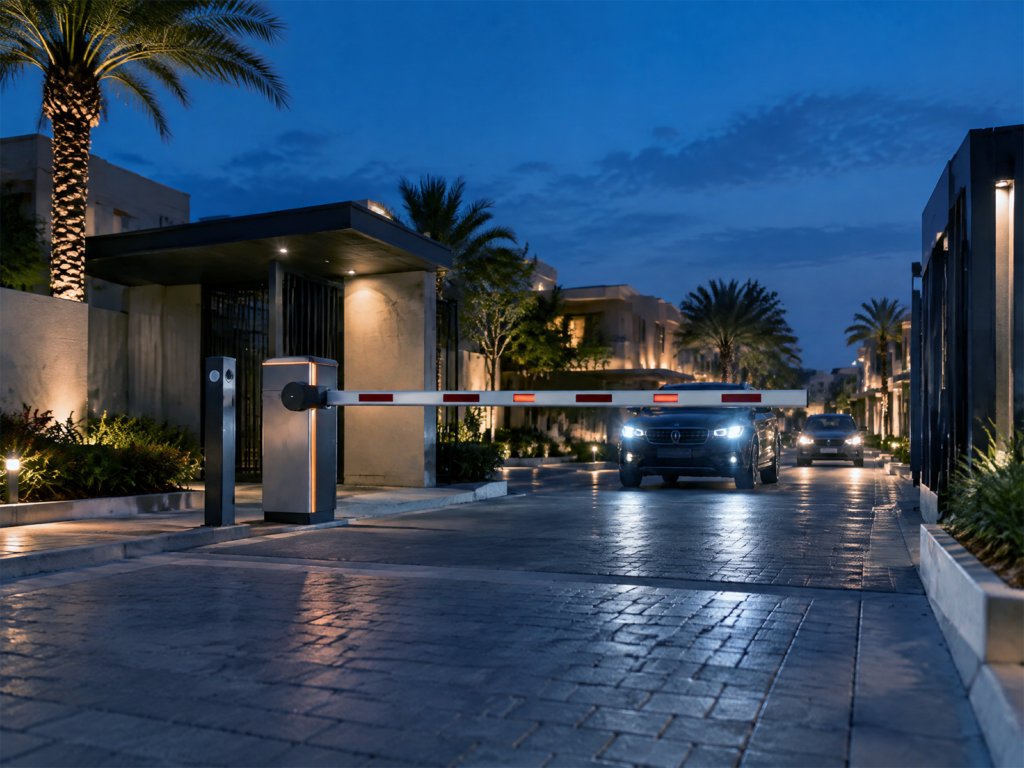
Control vehicle entry and exit with automatic car barriers designed to efficiently and easily organize traffic at parking lot and facility entrances.
GGS offers barriers in various sizes up to 12 meters, with strong, lightweight metal arms and operating options determined per the site's nature and usage requirements.
Better Organization of Vehicle Traffic
Automatic car barriers help manage entry and exit traffic and reduce unauthorized access, providing a clearer experience for drivers and site staff. Barriers can be used at standalone entrances or within an integrated vehicle-access-control system, based on the project's requirements and the required operating method.
Organizing vehicle traffic through a clear entry point that can be easily managed.
Barriers are available in multiple sizes up to 12 meters, with the size chosen after determining the entrance width and the site's nature.
Suitable materials and a carefully considered arm weight help achieve practical operation suited to frequent use.
The suitable control method is determined based on the operating mechanism, number of users, and the site's access-management requirements.
Where Can Car Barriers Be Used?
Car park barriers suit sites that need to organize vehicle traffic and control entrances, including:
The suitable system is chosen based on traffic density, entrance width, operating frequency, and the required control method.
How Do We Determine the Right Car Barrier for Your Site?
Choosing the barrier doesn't depend on the arm length alone — a set of factors must be studied to ensure the system suits the usage nature.
Determining the lane's actual width helps choose the right arm length and size.
Requirements for low-use entrances differ from parking lots with frequent vehicle traffic throughout the day.
The barrier's open/close method is determined by user permissions, the site's management nature, and whether it can link to an access system.
Vehicle and pedestrian movement, the barrier's installation location, and the required accessories are studied to reduce operating risks.
The site visit covers the power source, mounting space, traffic direction, and the best location for the barrier unit.
Car Barrier or Hydraulic Bollard?
The choice depends on the system's primary purpose.
- The goal is organizing vehicle entry and exit.
- You need a clear solution for parking entrances.
- You want to manage vehicle traffic at the facility gate.
- Usage is operational and frequent throughout the day.
- The priority is raising the site's security protection level.
- You need to restrict vehicle passage with a strong ground barrier.
- The site requires a security solution beyond organizing entry/exit traffic.
If you're not sure which solution fits best, a site visit helps determine the system suited to the entrance's nature and the required control level.
From Site Visit to Operating the Barrier
We determine the entrance width, traffic density, operating method, and the purpose of installing the barrier.
We propose the suitable size and specifications based on the site's details and usage requirements.
The mounting site is prepared, the barrier is installed, and the system's components are calibrated.
We test the arm's motion and operating commands before handing over the system and explaining how to use it.
Automatic Car Barrier Prices
Car barrier cost varies from project to project based on:
For an accurate quote, send the entrance details and a photo of the site, and the suitable solution will be determined and a quote prepared.
Examples of Car Barriers We've Delivered
Browse examples of car barriers GGS has installed at parking lots and commercial and residential facilities, with the size, control type, and project location shown.



Frequently Asked Questions
Organize Your Facility's Entrance with a Solution Suited to Your Usage
Share the entrance width, your city, and the expected operating frequency, and we'll help you determine the right car barrier and prepare a clear quote for your project.