
Hydraulic Bollards to Protect Facility Entrances
Movable ground-level solutions that help control vehicle traffic and raise the protection level at facility entrances and sites that need to restrict entry and exit.
GGS offers hydraulic bollards that rise from ground level, with sizes and control methods determined per the entrance's nature and the project's requirements.
Stronger Control at Vehicle Entrances
Hydraulic bollards are ground barriers installed at vehicle entrances, rising when the path needs to be closed and lowering to allow authorized vehicles to pass.
These systems suit sites that need a stronger solution than traditional arm barriers, with the open/close method determined per the facility's approved operating mechanism.
GGS's Hydraulic Bollard Specifications
The bollard's moving part rises to close the vehicle path, then returns to ground level when passage is allowed.
The moving part's height ranges, per the product's current specifications, from 650 to 1200mm.
The bollard can be made up to 6 meters wide, with the suitable size determined after a site visit to assess the entrance width and vehicle path.
The open/close method can be determined based on the client's requirements and the site's entry/exit management mechanism.
Final specifications depend on the site's nature, the required civil work, the targeted protection level, and the technical site visit's result.
Where Are Hydraulic Bollards Used?
Hydraulic ground bollards can be used at entrances that need to organize vehicle traffic with a higher protection level, including:
Each entrance must be evaluated independently to determine the bollard's dimensions, operating method, and foundation and integration requirements with other control systems.
Why Choose a Hydraulic Bollard?
The raised bollard helps close the vehicle path and block passage until an open command is issued.
The bollard lowers to ground level when passage is allowed, without needing side space for a large gate's motion.
The different sizes allow choosing a solution suited to the path width and vehicle traffic nature.
The suitable control method can be adopted based on those responsible for entry and the site's management requirements.
The bollard can be used within an integrated solution including gates, car barriers, or access control systems, after studying the project's requirements and confirming technical compatibility.
How Do We Determine the Right Bollard for Your Project?
Choosing a hydraulic bollard doesn't depend on width and height alone — it requires studying a set of technical and operational factors.
The bollard's purpose must be defined — whether organizing traffic, restricting entry, or protecting an entrance requiring special security specifications.
The lane width is measured, and the vehicle entry/exit direction and the number of entrances to secure are determined.
The expected number of open/close cycles helps determine the system suited to the usage nature.
Installation requires assessing the excavation depth, ground nature, water drainage, and the location of the operating unit and wiring routes.
The operating method and the need to link the bollard with a gate or access control system are determined per the facility's requirements.
The Difference Between a Hydraulic Bollard & a Car Barrier
- Rises from ground level to close the vehicle path.
- Suits sites that need a higher protection level.
- Requires foundation work and civil preparations.
- Determined based on the entrance's dimensions and protection requirements.
- Relies on an arm that rises and lowers to organize traffic.
- Suits parking lots and entrances with typical operational use.
- Used primarily to organize entry and exit.
- Its foundation requirements are usually simpler.
If the goal is only organizing vehicle traffic, a car barrier may be the better fit. If the site needs stronger physical restriction of vehicles, using a hydraulic bollard is worth considering.
Stages of Supplying & Installing Hydraulic Bollards
We determine the system's purpose, entrance dimensions, traffic density, and the required control level.
The ground nature, installation space, and required civil and electrical work are reviewed.
The bollard's dimensions, operating method, system components, and execution scope are determined.
The foundation work is carried out, then the bollard, operating unit, and required wiring are installed.
The bollard's motion, operating commands, and usage procedures are tested before handover.
Hydraulic Bollard Prices
Hydraulic bollard cost varies based on each project's requirements, and among the most important influencing factors:
For an accurate quote, send the entrance plan or a clear photo of the site with approximate dimensions and your city.
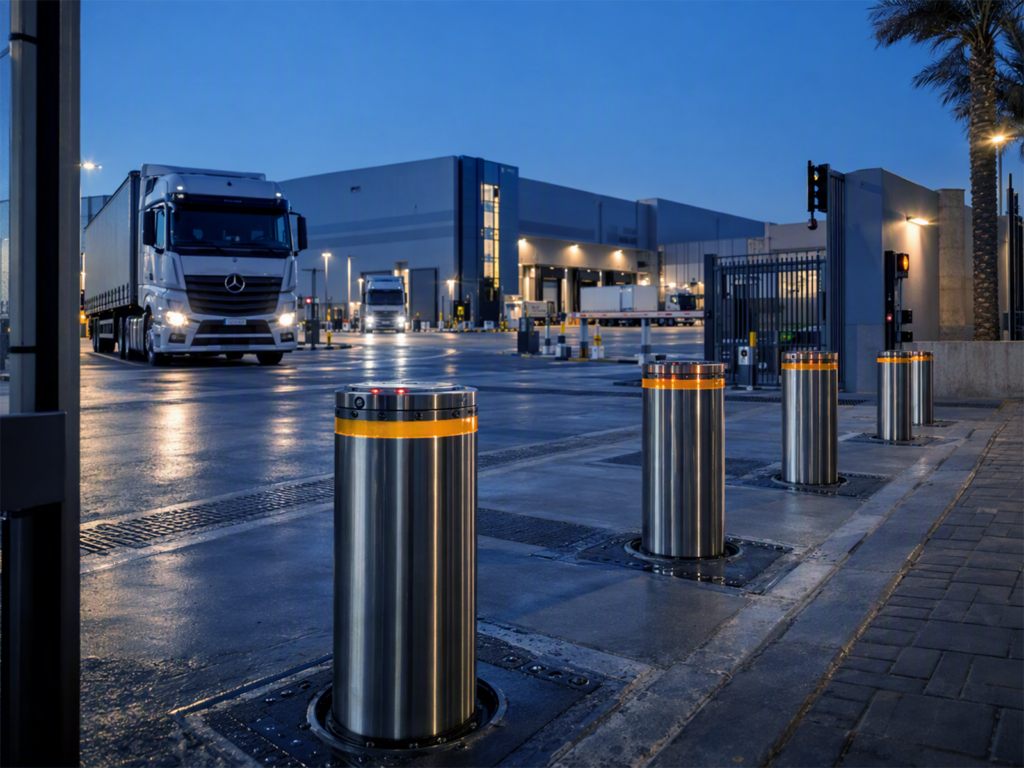
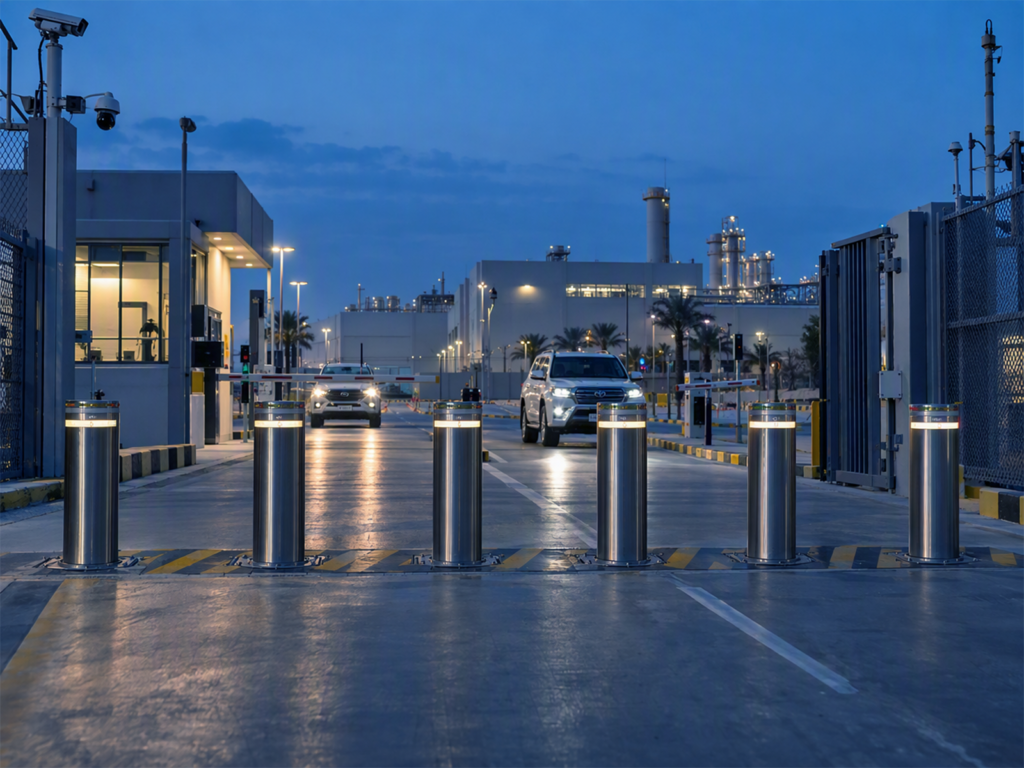
Examples of Hydraulic Bollards We've Delivered
Browse examples of hydraulic bollards GGS has installed to protect facility entrances, with the size, protection level, and project location shown.


Frequently Asked Questions
Start with a Site Visit to Your Project's Entrance
Share the project location, entrance width, and required protection level, and we'll help you determine the right specifications and prepare a clear quote for supply and installation.